
In the make-shift sitting room of my maternal grandparent’s small wooden cottage in Coonamble, a striking photograph of a mature aged man looks down upon us. ‘Who is that man, Nan?’ I ask. ‘That’s my brother Jack,’ she replies. ‘He died a long time ago.’ Many years later, Nan would tell me more about Jack, the great uncle I never met. Jack’s portrait hung in that house for as long as I could remember, as if always begging for his story to be told. I’ve spent the past few years researching the story of Jack’s younger brother Syd, who led an extraordinary life. Now, researching Jack’s life, I find he is no different. And strikingly, they may have both battled the same demons, ending their lives in tragic ways. But what tormented Jack and Syd? And what traumas led them down a similar path in life?
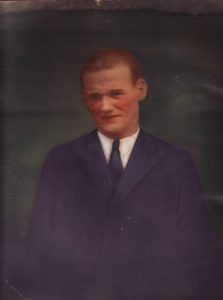
John Herbert (Jack) Drew was born in 1911, the first son of William Richard Duck and his second wife, Ada Mary Drew, whom he had married bigamously. Jack was born in Harden, in southern NSW. A year later the family moved to Crookwell, and Jack, barely able to walk but very intelligent and eternally curious, was found wandering on the railway tracks near their home. Another time his parents found him holding a young bird, trying to discover what was underneath the feathers. Jack was joined by younger brother Syd in 1912, and sister Connie in 1913. Jack and his siblings would have had an idyllic childhood, if not for their father’s grave mistakes. Jack would barely remember his father, as William was arrested for bigamy soon after Connie’s birth. By the time Jack was three, William was gone from his life. Jack would spend the rest of his life searching for the father who deserted him.
After the court case and subsequent voiding of her marriage, Ada took little Jack, Syd and Connie to Newcastle where she had a friend who helped her find work with a solicitor. But this meant she could not keep the children with her during the week, so they were boarded out to the Neumann family. The arrangement was to last seven years. Deprived of both their parents, one permanently, the other regularly, the siblings’ close bond was sealed. Jack no doubt remembered this time period more keenly being the eldest.
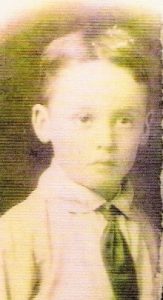
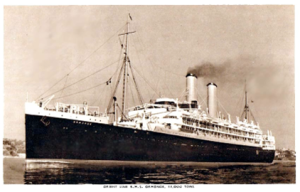
Jack would be schooled in Newcastle and gain an Australian accent, join in bush activities and have the Australian way ingrained in him. The arrangement with the Neumanns last until 1920, when Ada inherited a few hundred pounds from an aunt who passed away. She saw it as a chance to flee the country that had brought her so much pain and immediately booked a passage for herself and her children back to England, where she could find refuge with her family. On the 12th February 1921, a week before his 10th birthday, Jack stepped foot aboard the Orient Line’s R.M.S Ormonde. With tales in his mind from his mother, about his father’s life as a ship’s engineer, no doubt the fascination of the ship kept Jack from dwelling on the life he was leaving behind. The family travelled in third class, as migrants, bucking the trend and moving back to the Motherland, when so many others were making Australia their new home.
Upon arrival in London, Ada sought to provide for her family, finding work at a drapery shop. But once again, she was unable to have all her children with her, for the employer provided a room fit only for herself and Connie. Feeling she had no choice, she sent Jack and Syd away up north, to be boarded out again, possibly in a Barnardos home. It would be years before the boys would come back home to live with their mother, after her brother Will secured a three-bedroom home in East London for them all to live in. But by then the damage was done and Jack came home an angry teenage boy. Whereas Syd was quiet and liked to be indoors, playing card games and listening to the radio with Connie, Jack was often out.
In 2001, I recorded a phone conversation with Connie, where I spoke with her for two hours about the people she grew up with in England; her maternal family. Connie enjoyed reliving her childhood in their family home at 11 Wigston Road, Plaistow. In one recounted memory, Connie recalled Jack coming home late at night. Their Uncle Will, known as Nunc, was waiting for him. ‘Now look boy, you’re worrying your mother’ he told Jack sternly. ‘Why can’t you be like your brother Syd?’ Nunc pleaded. ‘Sorry Nunc’, was all Jack could say. He knew his mother was likely still awake, so he knocked on her door. ‘Mum, are you awake?’ he asked. ‘Yes Jack’ she answered. The nerve pain in her hands often kept Ada awake and so Jack would massage her hands to relive her suffering. It was his way of saying sorry for worrying her. But Jack was a restless spirit and wouldn’t be held down.
Connie told me Jack went to sea at age 16, around 1927. I can find no record of this time period for Jack so it can’t be determined where in the world he may have gone over the next 6-year period. However records I’ve recently found show that by 1933, Jack was back in Australia. All that Connie knew was that Jack worked in the lead mines in Mt Isa before the war (WW2). However, these new records revealed some much more about Jack’s time in Queensland, something I’m sure my proud but brutally honest grandmother never knew about her brother. For Jack was a criminal. What Jack did would most certainly have brought shame on his family, including his elderly grandfather, uncles and aunts, mother and siblings and I believe he kept this a secret from them all.
In piecing it together, it appears two things collided to bring Jack undone for a time. Connie told me that Jack left home in search of their father. He took to the sea, because that’s what his father did. He kept a notebook listing every place he visited or lived and asked if anyone knew William Duck. His search got him nowhere. For his father was no longer in Australia. In a cruel irony, William Duck had moved back to the UK in 1917 and, as far as we know, never left. When Jack left home at 16 to search for his father, William was living just 15 miles away, on the other side of the Thames River. Jack’s search was always going to be futile and his wandering from place to place an unnecessary torment for him.
Jack’s roaming eventually took him to Mt Isa. He may have weathered the early years of the Great Depression, which began in 1929, but the economic hardships deepened during the early 1930s and into the middle of the decade. During October 1933, the mining operations were producing thousands of tonnes of ore, silver-lead and bullion. But by the following month, strike action was taking place, over poor pay and conditions. Mining operations were shut down for a time and job losses were widespread. A newspaper report sounded the alarm about the growing swell of unemployed men who had left Mt Isa in search of alternative employment.
‘The industrial trouble commenced at Mt. Isa early in November, and as roughly, 1400 men have been directly involved in the closure of the mines. Too often it is forgotten what a big strike really means and how its effects gradually extend to other industries, causing unemployment, suffering, and actual want, perhaps hundreds of miles from the immediate scene of the trouble.’
The strike action was a turning point for Jack, who likely travelled by train from Mt Isa to Townsville and then on up to Cairns. By Christmas Eve, alone and without family, he hit rock bottom. With unemployment rates around 25-30% in some areas, Jack may have tried applying for ‘susso’ or the sustenance payment. According to Beaumont, who wrote about Australia’s Great Depression, the QLD government ‘restricted ration coupons to those for whom no relief work was available or who were physically incapable of heavy manual work.’ This may have meant Jack was not eligible for any assistance. Single men were also expected to travel to find work. Applying for this payment created great shame amongst proud men. The following article shows Jack had now desperately resorted to theft to survive.
‘Jack Herbert Drew, aged 24, a native of New South Wales, and who recently arrived in Cairns from Mt. Isa, was sentenced to six months imprisonment of each of two charges on Wednesday, the sentences to be concurrent. He was charged as follows;
That on December 24th, he broke and entered the butchers shop of Frederick Percy Marsh with intent to commit a crime; (2) that on December 24th, being a suspected person he was found in a public place namely, Shields-street, with intent to commit an indictable offence; (3) that on December 24th, he unlawfully had in his possession a pair of tweed trousers, tobacco pouch, pair of blue serge trousers, hair comb, pair of cream trousers, felt hat, razor strop and an electric torch, suspected of having been stolen. He pleaded guilty to the second and third charges.
Sub-Inspector F. H. Mclver, who prosecuted, said early on the morning of December 24th, Detective Acting Sergeant A. Mairs, Detective Constable E. Hird, and Plain Clothes Constable A. E. Wootten went to Marsh’s butcher’s shop and examined the door and found it in order. Mairs went away for a few moments and Hird and Wootten remained in close proximity to the shop. They saw two men go in the direction of the shop and then they heard the door rattle. Wootten went to the back door and Hird to the front. One of the men was defendant and be had a pair of pliers in his hand. A struggle ensued and the men escaped. Defendant was later located and when arrested had the goods in his possession, the subject matter of the charge.
A series of burglaries had taken place during the last few weeks. Rooms at the Strand Hotel, Grand Hotel, Railway Hotel and the Queen’s Hotel had been broken into and money and clothing stolen and the clothing found in defendant’s possession were some of the clothing stolen. Defendant asked the Court to extend leniency to him. The Magistrate said defendant was not deserving of leniency. He was convicted and sentenced to six months imprisonment on each of the two charges the sentences to be concurrent. Sub-Inspector Mclver offered no evidence on the first charge and defendant was discharged on that charge.’
Once released from prison, Jack kept his head down for a couple of years. He may have returned to the mines or gone looking for labouring work, much of which in Far North Queensland was seasonal. But by early 1937, Jack was in trouble once again. That year would prove to be particularly turbulent. Jack had moved down the coast from Cairns to Innisfail, a small seaside town, where he quickly became well known to the police. The Cairns Post published an article on the 6th January, 1937 outlined Jack’s latest lawless adventures.
EVADED POLICEMAN. BUT LATER LOCATED. INNISFAIL INCIDENT.
‘This morning at the Court of Petty Sessions, before Mr. R. H. Allen, PM, Jack Herbert Drew pleaded guilty to a charge of having made use of obscene language. Senior Sergeant Collyer, who prosecuted, said that on the evening in question Constable Hocken, went into the bar of the Grand Central Hotel, where he heard defendant making use of very filthy language. He walked over to defendant and told him he was going to arrest him. The defendant ran away to a lounge and was pursued and overtaken by Constable Hocken, who conveyed him towards the watchhouse. On reaching the steps near the latter place defendant broke away and disappeared. A search was made for him and he was later seen at the Grand Central Hotel, but when defendant noticed the police he made off.
Last Friday, when, defendant called at the police station for rations, he was recognised by Constable Hocken. Defendant then stoutly denied the complaint. The language used in the bar was simply shocking. Defendant informed the court that he thought the constable was as drunk as himself. He asked for leniency. Mr. Allen: The language you used was filthy and disgusting; I could not imagine anything more abominable that these words. You will be fined 3 pounds or default three days in the lockup.’
This brush with the law coincided again with the seasonal lay-off and the holiday period. Another newspaper article described a thousand men out of work in the Innisfail area at the time, Jack likely amongst them, if he was asking for rations. Jack had now been away from his family in England for around ten years and unable to afford a fare back to the UK, he resorted to drowning his sorrows instead. It is important to keep these periods of unemployment and destitution in mind, for they surely informed his choices in later life. What we might also consider is the effects that his time in the mines had on his physicality. Connie told me Jack often complained of ill health and mentioned he never liked to drink the milk recommended to line his stomach, which it was believed (at that time) prevented health issues from the lead. Lead poisoning can cause multiple issues, including neurological changes like irritability, memory loss, headaches and abdominal issues. There are also many articles linking lead poisoning to aggression and impulsive behaviour. We’ll never know if something like this played a part in Jack’s torment.
As a man without family close by, struggling with periods of irregular work, desperately searching for his missing father and with possible health issues, Jack’s struggles with life during the mid-1930s was sadly unknown to his family. Perhaps a relationship also soured during this time, as Connie told me she thought Jack had fathered a child whilst in Queensland as well. But support was on its way, in the form of Jack’s younger brother Syd, a quiet and sensible man, who was returning to Brisbane in March of 1937, to be with his new-found love. Jack travelled to Brisbane to meet Syd at the docks, and in the middle of the night, rowed a boat out to the ship, where Syd went over the side with his belongings, and stole away from his life at sea, for the love of a woman. Knowing more about Jack now, than when I wrote about Syd’s life, it doesn’t surprise me that Jack was involved in Syd’s abandonment of his post. Jack the dare-devil, battling his own chaotic life, encouraging his brother to leave stability behind to chase a dream, fits with Jack’s nature. Any stable influence Syd brought to Jack’s life however, was short-lived. For Jack was back in trouble later that year. An Innisfail newspaper article of August 1937 provides the raw details of Jack’s clash with police.
FOUR CHARGES – Prisoner’s Wild Effort
Jack Herbert Drew (28) appeared in the Innisfail Police Court, before the P.M. (Mr. R. R. Allen) on Saturday, charged with (1) In a public place he behaved, in a disorderly manner; (2) used obscene language; (3) resisted arrest; (4) wilful destruction of property. To all the charges, the defendant entered pleas of guilty. Senior Sergeant R. J. Gannon (prosecuting) said that, at 9.45 o’clock the previous evening, Constable Ziegenfusz was on special duty near the electric speedway in Edith Street, and his attention was drawn to defendant, who was in a crouching position; with one arm extended. Then defendant approached several people, waved his arms about, and called out in a loud tone of voice. After this defendant approached a woman. The constable walked over, arrested defendant, and started off with him to the watchhouse. Then defendant broke away and ran off. The constable pursued him, and it was during the pursuit that Drew made use of the obscene language. When Constable Ziegenfusz caught him defendant resisted violently and kicked at him. Constable W. L. Hocken came on the scene, and assisted to bring Drew along, a certain distance, but still the prisoner resisted. A taxi was then called, and after Drew had been placed in it, he punched the back pane of glass in the vehicle and smashed it.
Asked by the Magistrate if he had anything to say, the defendant replied, “No, but I would like time to pay a fine. I am working. I was previously out of employment for quite a time.” Mr. Allen: It is strange these men always have a job to go to when they are brought before the court. Senior Sergeant Gannon: This defendant, when arrested some months ago, broke away from a constable at Innisfail. In December 1933, he received six months at Cairns for being a suspected person, and was also punished for unlawful possession of property, whilst at Innisfail, on January 4 of this year, he was convicted for obscene language.
Defendant: I was pretty drunk last night, and don’t think I was responsible for my actions. For behaving in a disorderly manner, defendant was convicted, but not punished; for obscene language he was fined £2, in default 7 days; for resisting arrest, £1 or 7 days; and for destruction of property, £1, and ordered to make restitution of 10/- the value of the smashed window pane; total £4/ 10/-. The sentences were made cumulative. Defendant: I cannot pay now. Will you allow me time? Mr Allen: Is there any objection? Senior Sergeant Gannon: I certainly have. He is not what he should be. Mr Allen: Maybe he is a slippery customer. I am not inclined to give time to pay.
Thankfully this would be the last (known) time Jack’s name would grace the newspapers. And luckily for him, it seems this news never made it to the Brisbane papers, where Syd could have read about his brother’s antics. It is not known how often Jack and Syd were able to see each other, living some 1600 kilometres apart. With Syd settling down with his fiancé Winifred, Jack finally decided it was time to head back to England, which he did around 1938. No doubt this was when he relayed many stories of his time in Queensland to his family and spoke of Syd’s new life. There is however a niggling doubt with me that Jack approved of Winifred. On the 9th April 1939, Jack boarded the S.S Jervis Bay at Southampton, bound for Brisbane. Just a week later, Syd married Winifred, not waiting until Jack landed to seal his commitment to her. Jack would step foot off the ship a month after the marriage, too late to reverse the help he had provided two years previously, if indeed his initial acceptance of her had soured. The timing of Syd’s marriage could suggest Jack’s opposition to the marriage. Either way, Jack was about to make changes to his own life. Leaving Brisbane and his brother behind, Jack made his way once again to Far North Queensland and back to Cairns, to the Arcadia Boarding House address he had listed on the ship’s manifest. It was now May 1939. And the world was about to implode.
Stay tuned for part 2 of Jack’s story, coming soon.