
THEN AND NOW SERIES
20 minute read
As news of the increasing housing crisis fills our social media and news cycles, it is difficult to look away from what appears to be a slow-motion car crash. We continually hear that our young generations are doing it tough, with stagnant wages and exploding property values. Over the past thirty years since I entered the workforce, I’ve seen property become the domain of the investor. Online repositories of advice such as Youtube are filled with entrepreneurs spruking the latest data and hotspots for property investment. Housing has become a commodity to be traded to the highest bidder, with the human rights factor falling by the wayside.
My own story of home ownership came via some luck, intense market research and a fair whack of material deprivation for a set period of time. COVID-19 ended up being the catalyst for getting my act together and finally achieving that long held dream; the Australian Dream, as they call it, of Home Ownership. There is no doubting that our current generations have many more shiny things shoved in their face on a daily, if not hourly basis, cajoling them to buy, buy, buy. Things our grandparents would never think of as essential, are now the daily necessities of life in our modern fast-paced world. And with battle lines drawn between young and old, I was curious to do a deep dive into my own family’s past involvement with the housing market.
For me it begged the question, how did generations before me deal with acquiring property? Or just finding a decent roof over their heads? There are no ancestors on my direct line with substantial wealth, just ordinary middle-class citizens, doing an honest day’s work, for an honest day’s pay. So without self-built wealth, or inherited wealth, how did they navigate the property maze? This story is by no means an in-depth look at housing policies over the past three generations, but more a reflection on achievement, with a few historical facts thrown in. It’s a complex subject that would run to hundreds of pages, if given its due credit.
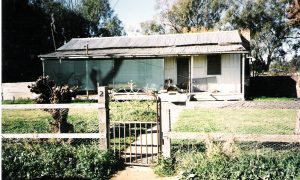
So to start I’ll look at my maternal grandparents, Connie and Charlie Andriske, whose home was humble but their own. Connie and Charlie were in their mid-30s when they married, in 1949. Charlie had returned from service in WW2 in 1945 and went back to live with his mother in Coonamble, where he was born. He was paid 134 pounds at the end of his war service. Connie came to Coonamble with her mother in 1948, after securing a bookkeeping job. After their marriage, Connie and Charlie went to live on a property out of town, in a very basic house. It had no hot water, no refrigerator and a simple fuel stove. They got to and from town in a horse and sulky. Charlie made his living as a storeman, a humble job with a decent pay.
It wasn’t until 1951, some five years after his discharge, that Charlie was paid his war gratuity. It amounted to 33 pounds and with this and the 134 pounds he’d perhaps kept saved, he was able to buy a three-bedroom weatherboard shack in town. If we convert that to today’s money, it is just over $9,000. This would have been more than enough to buy the house and land in 1951. I estimate the house was already quite old by that stage (perhaps built around 1900), but my understanding is that Charlie was able to buy the house outright. It was to be the Andriske family home for the next 60 years.
Money was tight by the time five children arrived, even without paying a mortgage or rent. Vegetables were grown at home, and trips to the local tip unearthed useful items that didn’t need to be paid for. In terms of value for money however, the house got a good a hundred years or more of life, and was a safe haven for my family and others before them. It may not have been fancy but it gave its occupants the basics; shelter, warmth, facilities.
With Coonamble some 500 kilometres from Sydney, Charlie and Connie were insulated from a lot of the housing pressure. People were not exactly banging down the doors to get into this small country town. But elsewhere in Australia, one issue was plaguing people of the 1950s. It’s little different to today; immigration.
MIGRATION DEEPENS HOUSING CRISIS. To accommodate the number of migrants brought to Australia by the Menzies Government last year would require the construction of at least 20,000 new homes. 500 new school classrooms. Four 100-bed hospitals. Plus all necessary services such as water supply, gas, electricity, sewerage, transport, etc. Excess of arrivals over departures for the year ending December 1956 was 86,105, including 25,235 children and students. Largest groups were Italian, 25,433; British 21,027; Greek, 11,741 and Dutch 10,220. Menzies mass migration policy is the greatest single cause of the chronic housing crisis, inflated costs and prices. Tribune, 10 April 1957
In the cities prices were increasing and new migrants seen to be causing the price hike. But for Connie and Charlie, it hardly mattered, for there were always more pressing issues at hand.
Growing up, we lived a two hour drive from Charlie & Connie and so when we visited, it was more often than not a day trip down and back. Once I was old enough to start appreciating my surroundings and thinking deeper about things, I suppose I felt a little embarrassed about the condition of the house they lived in. I wondered how a couple could be happy, not only living in such a small town, but also in a house that was lacking in so many things. Take for instance the drop toilet. A walk through the house, and out along a concrete path, brought you face to face with the intimidating thunderbox. Creaking open the wooden door, the stench immediately hit you in the face. And with no lighting, you could barely make out where to sit your bare bum. Losing my (inept) left hand to strategic placement over my nose and mouth, my right hand was made to touch (gingerly) all manner of icky things. As someone who is highly sensitive to smells, the overriding sensation to throw up has been one of the few things left burnt into my brain from visiting with my grandparents. I recall one visit where I refused to use the thunderbox before we left to drive home, because I could just not face that trauma again. It must have been a long trip home with a filled-to-the-brim bladder. Thankfully sometime in the later 1980s, the house was upgraded to indoor plumbing, and the brave pan-man no longer had need to visit 2 Mendooran Street, Coonamble.
I also recall being grilled each visit by Charlie, wanting to know how ‘Dirty old Dubbo’ was. To me Dubbo was preferable and I couldn’t understand his loyalty to ‘Dirty old Coonamble.’ But I’ve no doubt that Charlie was happy in his home and never wanted to leave. His home was his castle and it was his, and his alone. And Connie’s home too, but I’m sure given the choice, she’d have legged it back to London and the mod cons of city life. But simple they had and simple would suffice.
Now when I turn to look at my paternal grandparents, Charlie and Rene Poulter, their housing experience is different. When Charlie and Rene married in 1939, they more than likely had few pennies to rub together. Charlie was a forestry worker in the Pilliga scrub and Rene gave up domestic service work to be a wife and mother. They soon moved to Sydney, into Charlie’s parents house in Clovelly, before shifting again to Wollongong during WW2, where Charlie worked in the steel factory. They rented a humble weatherboard home in Belmore St. The house still exists but is under increasing pressure from large unit blocks being put up in the street. Life as renters was no doubt just as tough as it is today, with the uncertainty of how long you’d be able to stay and the costs associated with moving from property to property, possessions and children in tow.
And at the end of WW2, when Charlie and Rene were living in Wollongong, Australia was facing housing pressure from an increasing population and shortage of dwellings.
THE HOUSING CRISIS. Public debate is revealing the real dimensions of the housing problem. It is officially stated that at the end of 1943 some 278,000 “dwelling units” were needed to house the normal population, and the number required annually to provide for current dilapidation and normal increase in population is 40,000 a year. The official programme for the year ending June 30 next is 21,000, rising to 50,000 in the following year. Even at this improved, and hitherto unequalled, rate, the lag in housing would not be over-taken for 35 years. Sydney Morning Herald, 8 August 1945
The next move took Charlie and Rene to a farm called Frogmore Park, just outside Gunnedah. Here Charlie took a farm labourer job that came with a bonus; a house. Charlie didn’t tell Rene about the condition of the house, as he was probably just thrilled it came at no cost. What it lacked in things like electricity, it made up for in Rene’s way of keeping house. With free meat, eggs and milk provided, supplemented with store-bought vegetables, rice and split peas, the family ate simple but nourishing meals that Rene lovingly prepared. Everything was used up, nothing gone to waste. They made do, and even today, learning from Rene, we have ‘make do’ weeks in our house on occasion to minimize wastage and save money. It was a part of the strategy employed when we were saving to buy our home.
When Charlie became too ill to continue the farm work, the whole family packed up their most precious and practical belongings and moved to Dubbo. It was here, in the summer of 1954/1955, that the family waited for housing to become available. It meant living in a tent, on the banks of the Macquarie River, for three months. Rene described this time as the worst of her life. Between trying to prepare meals, keep clothes clean and safeguard her six boys, aged from 15 to 6, it was exhausting. Relief came when the big flood of 1955 arrived. The family moved to the showgrounds with many other families, one of the few flood-free areas in town. Eventually a new Housing Commission house became available in Bailey St, a simple three-bedroom fibro home that the family were no doubt very grateful for. Rene told me it was quite small, with the kitchen and loungeroom combined.
They were lucky to get housing so quickly for the demand far outstripped the supply. A newspaper article from 1955 about Dubbo’s plan for public housing is illuminating.
The Housing Commission has built 180 homes in Dubbo since it started operations but there are 170 families requiring accommodation with 50 families listed as emergency cases. The Housing Commissioner (Mr. Gallop) said that a further 60 homes were under construction and there were 260 blocks ear-marked for future homes. Re-marking that by that time the 500 homes were completed there would be, according to the Mayor (Ald. Ford) 25,000 people in Dubbo. Mr. Gallop added that he hoped the lag in housing in the town would be overtaken as soon as possible. Western Herald, 11 February 1955
This investment in public housing would benefit my family for decades to come. In 1960, after a seventh child was born, (finally a girl), Charlie and Rene secured a slightly larger home at 131 Jubilee Street, in South Dubbo. The family of nine would eventually share with a tenth member, Rene’s mother Minnie. Even the loungeroom was utilized as a sleep-out for the older boys. With the boys working in the trades, mainly painting, the house was always well maintained. Owing to the cramped space inside, the backyard became the essential extension to the home. The boys built what was termed ‘The Beer Garden’. Plenty of pubs had this iconic feature at the time, and as the boys spent so much time at the pub, naturally this was the name chosen. Rene’s domain was the kitchen and the garden, and over the years she lovingly planted many iconic shrubs and trees to keep the house cool and beautify the property.
When Charlie passed away in 1986, Rene continued living in the house for another thirty years. Whilst it never belonged officially to our family, we all considered it home and cared for it as if it was our own. This humble Housing Commission home gave my grandparents stability and a central gathering place for four generations of our family. In honour of this house that had such a profound impact on me growing up, I’ve called my own home ‘The Golden Jubilee House’.
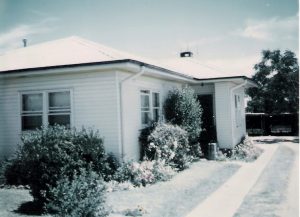
Sadly, both of my grandparents’ houses have been demolished now. Charlie and Connie’s house was bulldozed back in the 2010s when the family sold the property. The land sits empty today. Charlie and Rene’s house was demolished about three years ago to make way for new townhouses.
And so when it came to my parents securing their future, the dream was to build their own home. But it all began with a Housing Commission home that we moved into when I was about a year old. The house at 2 Gilbert Street, in South Dubbo was a two-bedroom fibro house with a large fenced-in backyard. If I was to compare it to today’s homes, it was a version in miniature. My brother and I shared a bedroom, in bunk beds. We had a small but functional bathroom, kitchen and laundry. The rent was $20 a week. Properties in this street are selling for close to half a million dollars in today’s market.
At the time my parents were raising my young brother and I in the 1970s in this home, people were speaking out about the disintegrating rental market.
HOUSING CRISIS DEEPENS – SYDNEY: The housing shortage has forced many people to rent rather than buy. This has put pressure on rented accommodation, squeezing low income earners out of many areas. But they have nowhere to go. Welfare housing was cut by $70 million in the last budget. Sydney City Council has got into the act by raising rents – from $20 to $55 for a two bedroom terrace. And a further rise to $65 is planned for next March. But the tenants are fighting back. Last week over 1 ,000 of them formed a tenants union to fight exorbitant rent increases. Tribune, 20 September 1978
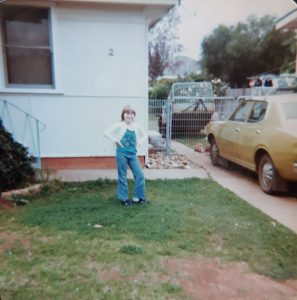
Just as it was for my grandparents, money was also tight in our household. Dad was the sole wage earner for many years, working as a house painter, until Mum convinced him she could go to work as well. She did part time shifts as a school cleaner. They earnt ordinary wages but with a stable and fair rent, they were able to save a deposit towards building a house on the block of land they had bought with a small windfall. Their new three-bedroom, two-bathroom, two-living room brick home was built in 1982 and elevated our family to a level of luxury we’d never have imagined. My brother and I had our own bedrooms which meant we could each pursue our own interests without annoying each other. Still, by today’s standards it would not have matched up. We had a wood heater that warmed just half the house, leaving the bedrooms freezing cold in winter. For air conditioning, it was a standing fan in each room or open the bloody window! With summers scorching up to 45 degrees celsius, an inground pool would have been marvellous, but cold showers had to suffice. There was a mortgage to pay and all the expenses that went with raising a family on a farm. But it was manageable and life was good.
Then, in 1987 the stock market crashed and the world entered a recession. Interest rates went through the roof and mortgage repayments meant many families struggled. In 1982 the interest rate sat at about 13% but by 1989 it had hit an all-time high of 17%. Household bills and farm maintenance took precedence in our corner of the world. If we needed new clothes, we mostly got them at Christmas or for our birthdays. I remember my brother was particularly unimpressed with ‘material’ gifts. But my mother had learnt to budget well and was still able to gift us with the latest sought-after fads, like Lego and Cabbage Patch Dolls. With the end of the year and Christmas approaching, money was tight and I was given the choice to go on the end of Year 10 excursion to the Gold Coast, or receive a much-wanted stereo system for Christmas. It was a useful lesson in choosing wisely but also appreciating that you can’t always have everything you want. For sheer value for money, I chose the stereo.
Families were hurting and the pain would last for a few years. Mortgage payments must have crippled some of my friends’ parents but I think we were all shielded from too much information and stress. This was a time without internet, without social media. We may have watched the news with our parents, but we were not continually bombarded with the doom and gloom so prevalent today.
This article from 1987 outlines the pain felt by many.
Interest Rates. Interest rates would be the death of the present Labor Government just as they were the death of every family and every small business in Australia, the Federal Opposition said in Parliament yesterday. The Opposition leader, Mr Carlton had raised the “appalling prospect of continuing high interest rates and their damaging effect on Australian families and enterprises” for debate as a matter of public importance. Mr Carlton said that since November 1984, savings-bank home-loan rates had risen from 11.5 per cent to 15.5 per cent. In 1984, an average family with a 25-year savings-bank mortgage of $50,000 would have paid $508 monthly on their loan repayment, but the repayments on that loan were now up to $659, a monthly increase of $152. He also said that in March 1983, the average family had spent 19.2 per cent on home-loan repayments but that had now increased to 26.5 per cent and over the same period the average tax paid by that family had increased from 17.5 per cent to 20.5 percent. Canberra Times, 19 February 1987
Interest rates were still high as I studied for my HSC in 1989. Then Dad had an accident at work where he broke both feet and from that came a compensation payout that allowed my parents to be mortgage-free. Life became comfortable again.
For shock value, I did a calculation of my mortgage repayment at 17% interest. Needless to say, even on two salaries, it would be incredibly difficult to keep the house. Particularly when you factor in all the ‘necessary’ mod-cons we require today.
The bean counters acknowledge that anyone who pays more than 30% of their gross income (before tax) on housing, is considered to be in housing stress. With house prices so high, as a ratio to incomes, so many of our generation of home buyers are trapped in a cycle of debt and fear of losing their homes. Many more cannot find the means to put a foot on the so-called ‘property ladder.’ We have social media fueling mindless consumer spending on the one-hand and driving despair over property prices on the other. We continually feel inadequate when we are not having overseas holidays every year or driving an SUV or possessing the latest i-phone version. Temptation is everywhere and it is often easier to give in to buying smaller purchases (like $100 here or there), than trying to save to achieve a dream that is seemingly out of reach (like home ownership). But without a solid foundation, it is hard to achieve future financial freedom.
My parents felt home ownership was the key to freedom, both financially and in a way, spiritually. They knew that taking advantage of low cost living in public housing could lead to owning something of their own. But it took determination and sacrifice. And a little bit of good (and sometimes bad) luck. My parents and grandparents lived a life that nowadays could best be described as very frugal. They didn’t pay for internet, health insurance, credit card interest, takeaway coffees, breakfasts out or a myriad of other dollar-guzzling distractions. There were no overseas holidays. Not one of my four grandparents owned a car, relying on walking, local public transport and lifts from family members.
But that was the old days. Long gone. What can young people do now to obtain the Australian dream of home ownership? And have we gone too far to return to a time when we valued the human right to an affordable roof over everyone’s head? I for one, sincerely hope not.